





Recent Posts
Contact Us
Author : Marketing Team | Follow us on LinkedIn:
12 May, 2021
Biometrics in Healthcare
Table of Contents
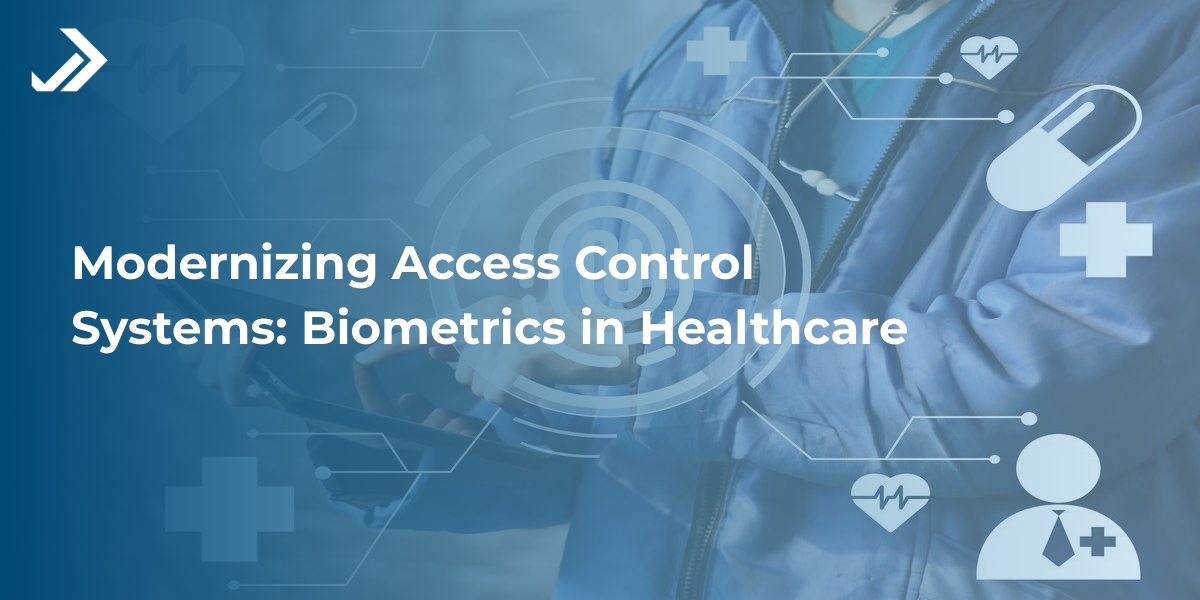
A touch, a glance, or even a few spoken words can account for a key step in an authentication process set up with the help of biometric security. Over the years, biometrics has proven to have widespread uses in different industries, be it for large-scale purposes like access control systems for doors, smart canteen management systems, visitor management systems, or employee attendance management systems, or for the most ordinary purpose of unlocking our mobile phones. Along with all the industries that are employing biometric technology to secure their facilities, the field of healthcare has emerged as one of the most suitable areas for the same.
A Better Access Control System in Place
Needless to say, a hospital is an area with numerous departments, housing hundreds of employees. Certain departments have free access for all, but a few others may grant entry to designated personnel only. Also, the frequency of visitors arriving in a hospital is quite large. In all these cases, monitoring all the access points, inside and outside the building, becomes very important so as to avoid any mishaps.
One of the basic mechanisms that can be installed here is a biometric security access control system for doors combined with fingerprint attendance for managing the employees. Of course, other no-contact options like facial recognition and iris scans can be engaged as per the employers’ requirements. For visitors, the situation gets a bit tricky since their biometrics are not registered within the system. However, with technology getting upgraded every day by leaps and bounds, certain alternatives like a digital guest pass with a unique biometric signature can help maintain discipline and security within the hospital’s premises.
A Safer Visitor Management System for Hospitals
The Covid-19 pandemic has also accelerated the requirement for biometric technology, as contactless access to any building and its services is very necessary considering the scenario today. Here, the visitor management system for hospitals comes in handy as an efficient management tool that aligns visitor meetings at the hospital or even a small clinic for that matter. In one of the methods of visitor pre-registration, the patients can inform the concerned personnel at the hospitals beforehand about the guest they are expecting, and then a predefined time slot can be allotted to that guest. The same request can be forwarded to the reception for quick authentication, and when the designated visitor reaches the hospital, their identity can be verified, with or without manual supervision. Nonetheless, visitor information can be corroborated in a systemised manner. For the current times, this method, of course, adds the incentive of avoiding overcrowding of visitors. Moreover, it helps the visitors as well as the staff of the hospital in creating a touchless, safer, and more secure experience from beginning to end. It is imperative that all parties concerning the visitor are in the loop, and this communication serves as an additional layer to secure the building from unauthorised access.
Establish a Secure Employee Attendance Management System
Apart from using biometrics for access control systems for your office, hospital, or clinic, maintaining accurate time and attendance records of employees is one of the technology’s core functions. Since many areas in a medical facility are subjected to authorised access, the biometric device you use should be of the latest make and build to avoid even the smallest error. Deploying the best biometric time attendance machine there is in the market is a significant choice that you should make, especially if you belong to a sector with sensitive areas in your work premises. Enhance security protocols and make the enrolment procedure more convenient as well as efficient. With an employee attendance management system that registers fingerprints, the hospital staff can punch in their attendance with significant accuracy. Furthermore, with features like facial recognition or ID card scan, the “no-touch policy” can also be put into effect. All in all, the hospital administration can keep track of their employees’ punctuality and process accurate salaries, and in return, this kind of system motivates productivity among staffers.
Smart canteen management systems with the utmost precision
The fundamental issues with the traditional method of canteen management of using a manual paper-based process were inaccuracy due to carelessness or forging and loss or damage to physical records. Getting a move on with the current times, a biometric canteen management system can solve these rudimentary problems and provide a modern feel to the canteen’s operating procedures. The core staff of chefs, waiters, cleaners, etc., can register their fingerprints or facial biometrics and gain access to their work area, also facilitating smoother payroll calculation. For visitors, a guest ID with biometric signatures or a biometric-enabled token can serve as their unique ID to avail of the canteen’s services. For the in-stay patients, a similar system as that of an employee can be adopted temporarily, where their orders can be billed under their account or room number. This can also help keep track of the right meals being served without any mistakes, assisting the medical staff further in analysing the patient’s progress.
A Transformation in Registering for Blood Donation Procedures
Blood donation camps are a regular event for countries aspiring to have a reliable healthcare system for their citizens. With numerous organisations and charities continuously putting together blood donation drives, there usually is no centralised data of blood donors – either regulars or first-timers. Having a donor identification system in place can really streamline the process of registration, donation, and maintenance of records. Many companies have adopted the concept of biometrics to organise blood donation camps and are reportedly able to manage much better as compared to the older methods of management. Earlier, cards were issued to donors that contained all the necessary information, making the whole process tedious. But now, with the help of a biometric control system, either through fingerprint or iris recognition, this data is stored digitally, eliminating the risk of duplication and data entry issues, as well as the need to carry identification cards every time. This helps to make the whole process secure and less time-consuming.
Streamlining Hospital Operations with a Time and Attendance Management System
Hospitals operate around the clock, with doctors, nurses, administrative staff, technicians, and support teams working across multiple shifts. Managing employee attendance manually in such a demanding environment can lead to inaccurate records, payroll errors, and difficulties in monitoring staff availability. A reliable time and attendance management system for hospitals helps simplify these processes while improving workforce management.
With biometric attendance technology, hospitals can record employee check-in and check-out timings accurately using fingerprint recognition, facial recognition, or smart card authentication. This eliminates the dependency on traditional registers and reduces the possibility of proxy attendance.
A centralised attendance management system also offers several benefits for hospital administration:
- Automated Shift Management: Manage rotating shifts, night duties, overtime, and employee schedules efficiently.
- Accurate Attendance Records: Maintain reliable records of employee working hours, late arrivals, early departures, and absences.
- Centralised Workforce Monitoring: Monitor employee attendance across multiple hospital departments and locations through a single platform.
- Simplified Payroll Processing: Generate accurate attendance reports to support salary calculations, overtime payments, and leave management.
- Real-Time Attendance Reporting: Access employee attendance information whenever required through web-based reporting.
- Improved Staff Productivity: Reduce manual administrative work and allow hospital management to focus more on essential healthcare operations.
Implementing a modern time and attendance management system for hospitals helps healthcare organisations maintain better workforce accountability, streamline administrative operations, and ensure efficient staff scheduling.
Spectra Technovision provides integrated biometric attendance and workforce management solutions designed to address the operational requirements of hospitals and healthcare institutions.
Learn more about the Time and Attendance Management System for Hospitals by Spectra Technovision.
Frequently Asked Questions (FAQs)
- How are biometric systems useful in hospitals?
Biometric systems help hospitals improve security and administrative efficiency through fingerprint and facial recognition. They can be used for employee attendance, restricted-area access, visitor verification, and monitoring authorised personnel.
- Why do hospitals need a biometric time and attendance management system?
Hospitals operate 24/7 with employees working in different shifts. A biometric time and attendance management system helps track working hours, manage shifts, record overtime, monitor absences, and maintain accurate attendance records.
- How does biometric attendance help prevent proxy attendance in hospitals?
Biometric attendance systems verify employees using unique physical characteristics such as fingerprints or facial features. This makes it difficult for employees to mark attendance on behalf of someone else.
- Can a hospital attendance management system manage multiple employee shifts?
Yes. A hospital attendance management system can support rotating shifts, night shifts, overtime, and different employee schedules. It helps administrators monitor attendance across departments.
- Can biometric attendance systems be integrated with hospital payroll software?
Yes. Depending on software compatibility and integration requirements, biometric attendance systems can transfer attendance records to payroll software, simplifying salary calculations, overtime processing, and leave management.
- Which biometric technologies are suitable for hospital employee attendance?
Fingerprint recognition, facial recognition, and smart card authentication are commonly used for hospital attendance management. Hospitals can select suitable technologies based on their security requirements, workforce size, and operational environment.
Biometrics in HealthcareCanteen Management SystemEmployee Attendance Management SystemVisitor Management System


